Marketing & Listings
Airbnb Listing Optimization: A Host's Guide
The complete guide to optimizing your Airbnb listing — title, photos, description, amenities, reviews, and the signals that move search ranking and conversion.
Free rental projection — about a minute
Step 1 of 4 · Address
What’s the address of your property?
We’ll pull real, comparable Atlanta listings to build your projection.
Free, no obligation. Prefer to talk? Call (770) 999-9740.
A well-optimized Airbnb listing isn’t a single action — it’s a set of interconnected decisions that compound over time. The right title pulls the right guests. Strong photos convert clicks into bookings. An accurate, detailed description reduces mismatched expectations. Reviews validate all of it.
The properties that consistently outperform their competition aren’t necessarily the nicest properties in the market. They’re the ones where every layer of the listing has been intentionally built. Here’s how to think about each one.
How Airbnb’s Search Algorithm Works
Airbnb doesn’t publish its full ranking methodology, but its behavior is well-understood through observation: the algorithm rewards listings that guests engage with and book. That means click-through rate, booking conversion rate, review score, response rate, and listing completeness all factor in.
Two implications follow from this. First, getting your listing in front of guests is only half the problem — the listing also has to convert those impressions into clicks, and those clicks into bookings. Second, a listing that shows well but consistently disappoints guests (generating low review scores) will see its ranking erode over time regardless of how polished it looks.
Optimization, therefore, isn’t just about front-end presentation. It connects to the entire guest experience. See the how it works section for more on how ATLStay approaches this end-to-end.
Getting the Title Right
Your listing title is what guests see before they click — it’s competing in a grid of thumbnails for attention from someone scanning quickly. That context shapes what a good title does: it communicates the property category, the strongest differentiator, and the location signal in a compact, readable format.
A title like “Cozy 2BR Bungalow Near Beltline With Parking” does more work than “Charming Home in Atlanta.” The former answers guest questions before they open the listing; the latter tells them almost nothing. Airbnb titles that include neighborhood or location context, a clear property descriptor, and one standout amenity tend to win more clicks from guests who are genuinely right for the property — which also improves booking conversion rates.
For more tactical copywriting guidance on titles and descriptions, see the companion post on writing Airbnb titles and descriptions that convert.
Photos: The Conversion Engine
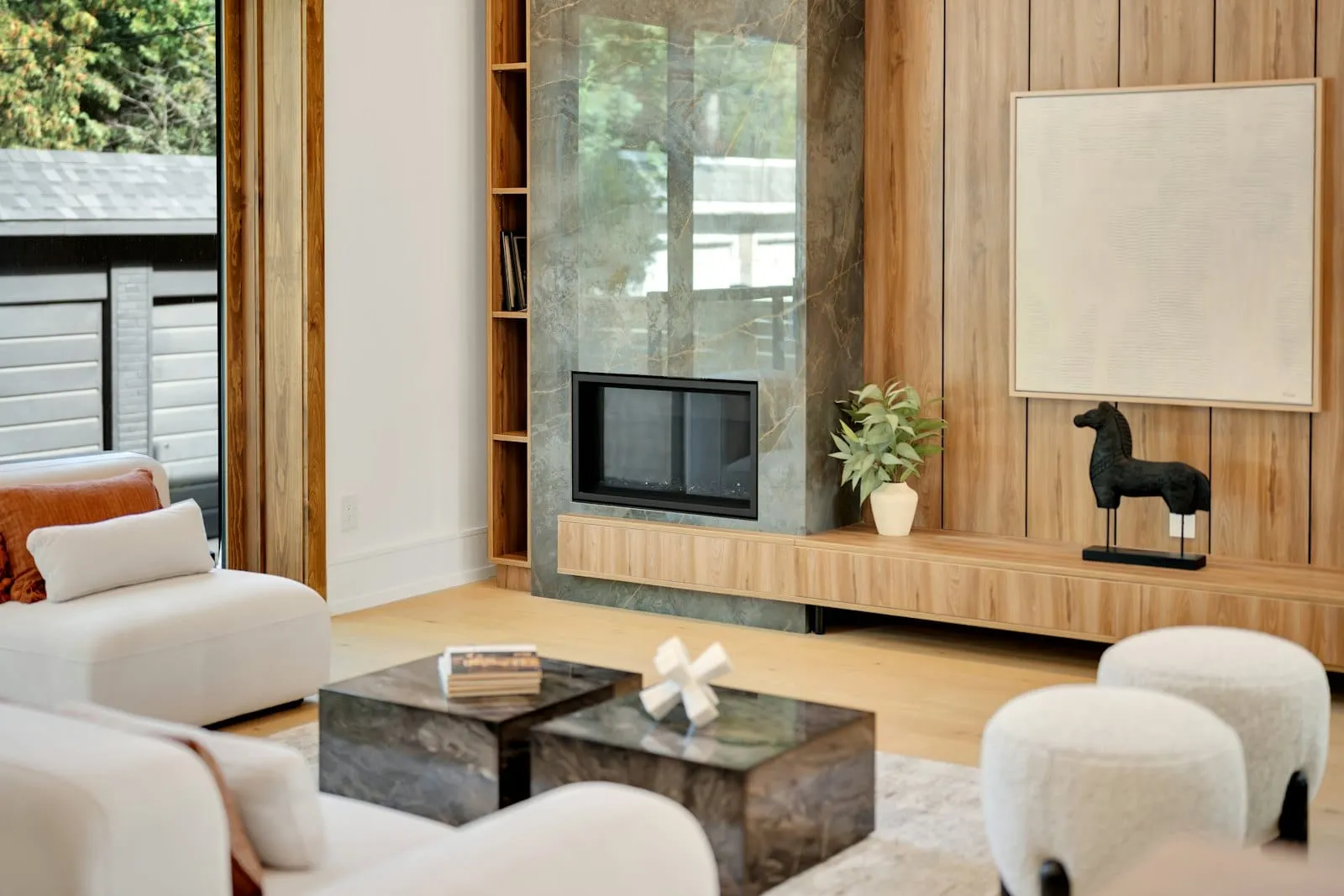
No other element of your listing has a larger impact on whether a guest clicks and books than photos. Before a guest reads a word of your description, the photo grid has already formed their first impression and anchored their mental price expectation.
The practical implications:
| Photo quality factor | What it affects |
|---|---|
| Professional lighting and staging | Click rate from search results |
| Accurate representation of the space | Review quality, complaint rate |
| Coverage of all rooms and key amenities | Trust, reduced pre-booking questions |
| Exterior and neighborhood context | Guest confidence and location appeal |
| Consistent quality across all images | Overall listing credibility |
The cover photo does the heaviest lifting. It needs to be the best image of the space’s best feature — typically a living area, primary bedroom, or standout outdoor space — shot in a way that communicates scale and quality at thumbnail size. A cover photo that doesn’t hold up at small size loses guests before they’ve read your title.
For a deeper look at this, see our post on why professional photos make or break your listing.
Writing a Description That Converts
Your Airbnb description should answer the questions a guest is holding before they decide to book. The opening paragraph needs to confirm the key facts quickly — property type, size, location character, who it suits best — so the right guest keeps reading and the wrong guest moves on.
After the summary, specificity converts better than adjectives. “Dedicated desk in the second bedroom with fast gigabit fiber WiFi” is more persuasive than “great space for remote work.” Concrete detail on the amenities that matter most to your target guest (workspace for business travelers, kitchen setup for longer stays, parking logistics for drivers) earns trust and reduces pre-booking messages.
Airbnb limits character counts, so every sentence needs to carry weight. Front-load the information guests search for; save neighborhood context and host notes for later sections where engaged guests will find them.
Amenities: What to List and How to Describe Them
The amenities list is both an algorithm input and a guest filter. Airbnb guests can search by amenities — pool, workspace, pet-friendly, self-check-in — so completeness here has direct search visibility implications.
More importantly, the amenities list functions as a promise to guests. Checking “workspace” when you have a small corner table is a mismatch that shows up in reviews. Checking it when you have a dedicated desk with good lighting and fast WiFi earns you specifically the business traveler who needs it and who will review accordingly.
Call out your best amenities in the description too — don’t rely on guests to find them in the checklist. Guests scanning quickly may miss that you have covered parking or a full washer/dryer, and those details often close a booking for the guest who’s comparing you to two other properties.
For context on how amenity positioning fits into a full management strategy, see what ATLStay’s services cover.
Building and Protecting Your Review Score
Reviews are both a ranking signal and a conversion driver. A listing with a strong review score and meaningful review volume outperforms an identical listing with few reviews — and the advantage compounds as both scores diverge.
The foundation of good reviews is accurate representation. Guests who arrive and find what they expected don’t have a reason to leave a frustrated review. Guests who arrive and find something better than expected leave enthusiastic ones. The most common sources of negative reviews — cleanliness, communication, listing accuracy — are all manageable with the right processes.
On the active side: sending a warm post-checkout message while the stay is fresh (and before Airbnb’s automated review prompt) meaningfully increases review rates. Responding to every review, positive or critical, signals to future guests that you’re attentive — and Airbnb’s algorithm gives review responsiveness its own weight.
Dynamic pricing also affects your review profile indirectly: a property that’s priced correctly for demand has fewer cancellations and fewer guests who felt they overpaid.
Response Rate and Instant Book
Airbnb’s algorithm heavily weights response rate and response speed. A host who answers inquiries within a few hours consistently outranks an identical listing with slower response patterns. This is one of the clearest algorithm levers available — and one of the hardest for individual hosts to maintain at scale without professional management.
Instant Book removes the inquiry step entirely for guests who qualify, which increases booking volume and satisfies another algorithm preference. The tradeoff — less screening control — can be managed through well-written house rules and careful guest requirements settings. For many hosts in competitive markets, the booking volume benefit outweighs the control reduction.
Putting It Together
A fully optimized listing is the sum of these parts working together. Strong photos earn the click. A clear title earns the right click. An accurate description converts it into a booking. The right amenities attract the right guest. Good operations produce good reviews, which feed back into ranking. That’s the flywheel.
If your listing is underperforming relative to comparable properties — or if you’re looking to understand what your property could realistically earn — see our areas we serve page and explore what ATLStay’s full management approach covers.
Curious what your property could earn with a fully optimized listing and professional management? Get a free rental projection from ATLStay — we’ll give you a comps-based estimate. You can also reach us directly at (770) 999-9740.
Written by the ATLStay team
We're a short-term rental management company based in Atlanta. Across our portfolio we manage 450+ homes, have earned 10,000+ five-star guest reviews, and bring 10+ years of hands-on Atlanta hosting experience to every guide we publish. More about ATLStay →
Questions about your specific property?
Talk to a real person on our Atlanta team — straight answers, no scripts.
Free projection · about a minute
What could your property earn?
Tell us about it and we'll build a free, comps-based projection — a real person, not an algorithm, back to you within one business day.
Free, no obligation. Prefer to talk? Call (770) 999-9740
Step 1 of 4 · Address
What’s the address of your property?
We’ll pull real, comparable Atlanta listings to build your projection.
Common Questions
Frequently Asked Questions
What is the most important factor in Airbnb search ranking?
Airbnb's algorithm weighs a combination of signals: listing completeness, review score and volume, response rate, acceptance rate, and booking history. No single factor dominates — but a strong review score and consistent response rate are consistently rewarded. Listings that are frequently clicked but rarely booked signal to Airbnb that something is off, usually photos or price.
How many photos should an Airbnb listing have?
There is no hard ceiling, and more is generally better — up to the point of diminishing returns around 40–50 images. Airbnb suggests a minimum around 20, but strong listings often exceed that by covering every room, key amenities, and the neighborhood context. Consistent lighting and professional quality across all images matters more than raw count.
Does the Airbnb title matter for search ranking?
Airbnb's search algorithm does incorporate listing text, but the title's bigger job is winning the click once your listing appears. A title that clearly communicates the property's category, best feature, and location shortens the decision cycle for the right guest. A vague or generic title wastes the most visible real estate in your listing.
How do I get more Airbnb reviews faster?
The most reliable method is a prompt, personal follow-up message shortly after checkout — before Airbnb's automated prompt arrives. Guests who had a good stay are likely to review if reminded while the experience is fresh. Delivering on every detail promised in your listing removes friction from writing a positive review. Response to reviews also signals to future guests that you're engaged.
What amenities most influence Airbnb booking conversion?
Fast, reliable WiFi is the single most cited amenity across market segments. After that, the list shifts by guest type: workspace and dedicated parking matter most to business travelers; washer/dryer and full kitchen matter to longer-stay guests; self-check-in matters to guests arriving late. Calling out amenities explicitly in your listing — not just checking them — converts better.
Can a property manager optimize my existing listing or do I need to start over?
In most cases, an existing listing can be meaningfully improved without starting from scratch. The photos, title, and description are all editable, and a well-managed listing rebuilds its review score relatively quickly. Starting fresh loses review history, which has real ranking value. ATLStay's onboarding process includes a full listing audit before recommending any structural changes.
Looking for more owner guides?
← Back to all resourcesRelated guides
Keep reading
Choosing the Right Airbnb Cancellation Policy
Flexible, Moderate, or Strict — your Airbnb cancellation policy shapes both booking conversion and income protection. Here's how to choose the right one for your listing.
Read the guide → Marketing & ListingsHow to Become (and Stay) an Airbnb Superhost
Airbnb Superhost status lifts your search ranking and conversion rate — but the criteria are demanding. Here's what it takes and how professional management sustains it.
Read the guide → Marketing & ListingsShould You Turn On Airbnb Instant Book?
Instant Book boosts your Airbnb ranking and fills your calendar faster — but the tradeoffs are real. Here's when to enable it and how to protect yourself.
Read the guide →See what your home could earn
Get a free, no-obligation rental projection from people who actually manage homes in your neighborhood.
Free · comps-based · delivered within one business day.