Georgia Markets
Airbnb on Lake Lanier: An Owner's Guide
A complete guide to running an Airbnb on Lake Lanier — lakefront demand, dock premiums, summer peak, county-specific STR rules, and what owners need to know.
Free rental projection — about a minute
Step 1 of 4 · Address
What’s the address of your property?
We’ll pull real, comparable Atlanta listings to build your projection.
Free, no obligation. Prefer to talk? Call (770) 999-9740.
Lake Lanier sits at an unusual intersection: it’s a genuine vacation destination with the demand pull of a major recreational lake, and it’s close enough to Atlanta that weekend trips require almost no planning. That combination creates one of Georgia’s most active short-term rental markets — one where the right property with the right amenities can generate strong summer occupancy, and where water access is the clearest single predictor of performance.
For owners evaluating Lake Lanier as a rental market, or for current owners trying to get more out of an existing listing, the fundamentals here are distinct from mountain markets and very different from urban Atlanta. The seasonality is sharper, the water access question dominates, and the regulatory picture is more fragmented than most owners expect.
What Drives Demand at Lake Lanier
Lake Lanier’s demand story starts with its proximity to Atlanta. Within roughly an hour of one of the South’s largest metros, the lake draws not just overnight guests but also day-trippers who extend into weekend stays when they find the right property. The sheer size of the Atlanta market gives Lanier a demand base that more remote Georgia lakes don’t have access to.
The recreational anchor is clear: boating, fishing, water skiing, tubing, and swimming are the primary reasons guests book. Lake Lanier Islands — the resort area on the southeast shore — adds event-driven demand with its waterpark, concerts, and holiday lights installations that extend the market’s active season into the cooler months. Georgia football weekends bring a secondary wave of weekend demand from fans who treat a lake house as a social base.
Summer is the market’s undisputed peak. Memorial Day weekend through Labor Day concentrates the highest booking intent and the highest willingness to pay, particularly for properties with dock access where guests can arrive by boat or launch from the property.
The Water Access Premium
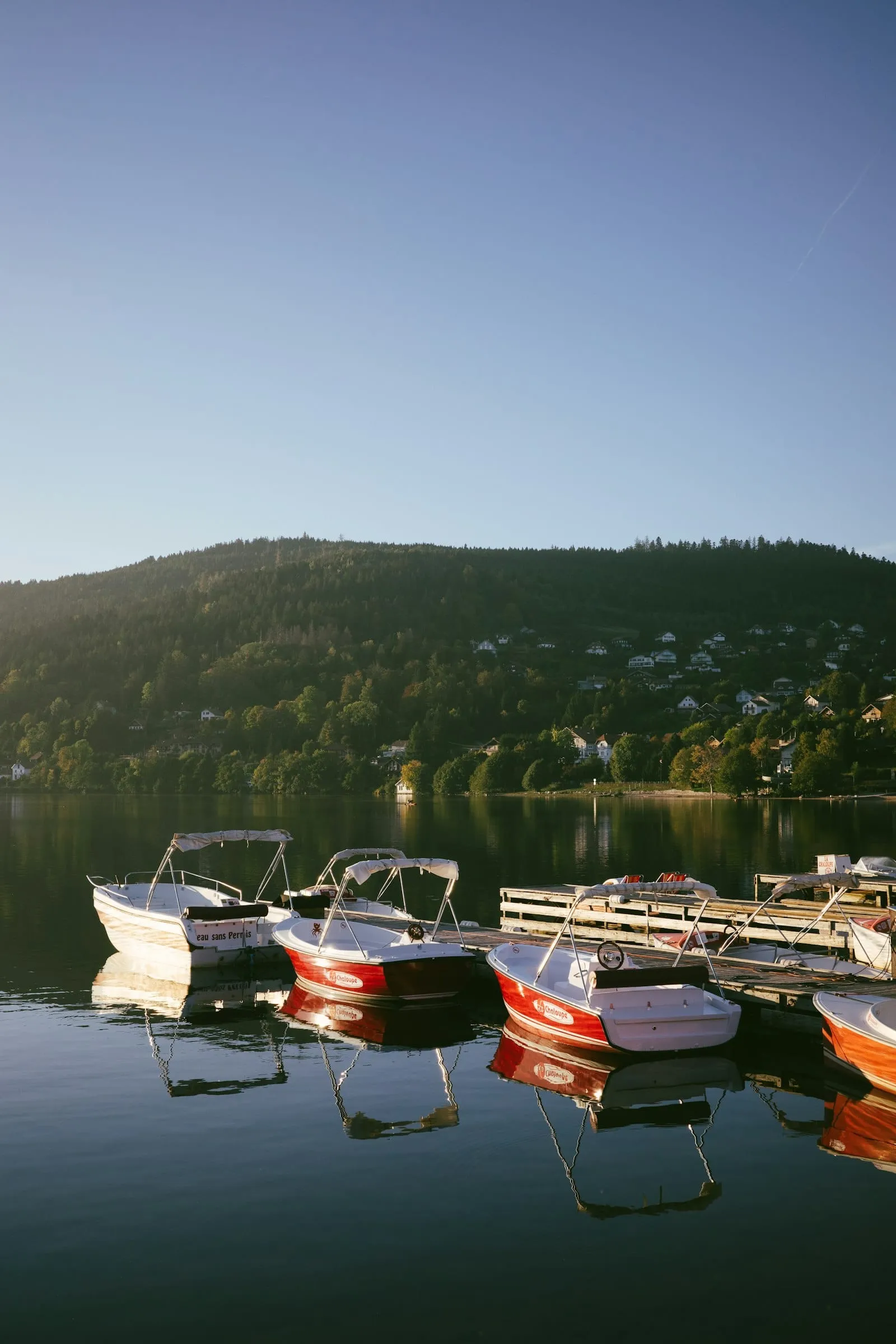
On Lake Lanier, the question of water access shapes the competitive landscape more than almost any other variable. Properties with private docks — where guests can tie up a boat, launch a kayak, or simply have direct lake access — operate in a meaningfully different tier from comparable homes set back from the water.
Guests who come to Lake Lanier for boating are booking with water access as a hard requirement, not a preference. They filter for it before looking at much else. That means a property with a private dock is largely competing against other dock-access properties rather than against the broader Lanier market.
The amenities that layer on top of dock access to further differentiate properties include:
| Feature | Booking impact |
|---|---|
| Private dock or shared dock facility | Primary filter for boating-focused guests |
| Boat parking or trailer storage | Valuable for guests bringing their own watercraft |
| Covered outdoor deck or lakeside patio | Core entertaining space for group bookings |
| Outdoor fire pit | Extends usable outdoor time into shoulder season |
| Large group capacity (6+ bedrooms) | Aligns with how boating groups travel |
| Screened porch or screened porch with lake view | Valued for evenings and off-peak visits |
Properties that lack direct water access can still perform well on Lake Lanier — particularly if they’re priced for what they offer and positioned toward the guests who are visiting for events or the surrounding area rather than specifically for on-water recreation. But the dock-access tier is the highest-performing segment.
ATLStay’s Lake Lanier property management service is built around the specific dynamics of this market, including the summer turnover pace and the seasonal pricing structure that lake properties require.
Seasonality and Pricing Strategy
Lake Lanier’s seasonality curve is steep. Summer peak demand is genuine and concentrated — which creates significant pricing leverage for owners who respond to it, and significant lost revenue for owners who don’t. Dynamic pricing is particularly valuable in this market because demand within a single summer weekend can vary substantially based on events, competing property availability, and booking pace.
The practical challenge is that many Lake Lanier owners list their properties with a rate they’re comfortable with and don’t revisit it through the season. In a market with the kind of peak demand concentration Lanier sees, that approach consistently leaves money on the table during high-demand periods and can over-price the shoulder stretches where occupancy requires more rate flexibility.
Understanding the full-year curve also matters for owners trying to decide whether Lake Lanier is viable as a rental beyond the summer window. Fall weekend occupancy — particularly tied to Georgia football and leaf season — is meaningful for properties that market to it. Holiday lighting events at Lake Lanier Islands pull winter visitors. Properties that remain marketed year-round with seasonally appropriate rates outperform those that effectively go dark after Labor Day.
For a more detailed look at how pricing strategy affects annual earnings in lake markets, the guide to how dynamic pricing increases Airbnb revenue covers the underlying mechanics.
Multi-County Regulations: Verify Your Specific Situation
This is where Lake Lanier diverges sharply from simpler markets: the lake spans multiple counties — Hall, Forsyth, Dawson, and Lumpkin all have shoreline — and each county governs short-term rentals in its unincorporated areas independently. Some properties also fall within city limits with their own separate ordinances layered on top.
There is no single “Lake Lanier STR rule.” A property in unincorporated Hall County may face completely different permit requirements, tax obligations, and operational restrictions than a property in unincorporated Forsyth County a few miles away. City of Gainesville properties have their own framework. The same is true for any other municipality that touches the lake.
Before listing a Lake Lanier property — and regularly as you operate one — you need to verify the current requirements for your specific county and municipality directly with the relevant local authority. Do not apply requirements from another county to your property, and do not rely on what applied in prior years without confirming it hasn’t changed. Our areas-we-serve page has additional context on the Georgia markets where ATLStay operates.
Why Remote Owners Benefit from Local Management
Lake Lanier ownership often comes with a degree of distance — the property is a lake house, not a primary residence, and managing it from an hour away creates real operational friction. Summer peak season in particular involves rapid turnovers, back-to-back weekend bookings, and the kind of time-sensitive guest issues (dock equipment, outdoor gear, weather-related questions) that require a local presence.
Professional management removes that friction while ensuring the property is consistently maintained at a standard that protects both review scores and repeat bookings. It also means having someone who can respond immediately when a guest has a problem on a summer Saturday, rather than managing it remotely from Atlanta.
For owners considering management or trying to understand how it compares to self-managing a seasonal rental, reviewing how ATLStay’s full approach works and the pricing structure is a useful step before requesting a projection.
Getting a Realistic Earnings Estimate
The range of Lake Lanier rental outcomes is genuinely wide. A lakefront home with a private dock and group capacity is a different product — and a different earnings conversation — than a mid-lake property without water access. Broad lake-market averages don’t capture that difference accurately.
If you want to understand what your specific Lake Lanier property could realistically earn, a free rental projection from ATLStay pulls real comparable listings for your property type, location, and access situation. It’s the most accurate starting point available, and there’s no obligation attached.
Want to know what your Lake Lanier property could realistically earn? Get a free rental projection from ATLStay — comps-based, specific to your property. Prefer to talk through the lake market directly? Call us at (770) 999-9740.
Written by the ATLStay team
We're a short-term rental management company based in Atlanta. Across our portfolio we manage 450+ homes, have earned 10,000+ five-star guest reviews, and bring 10+ years of hands-on Atlanta hosting experience to every guide we publish. More about ATLStay →
Questions about your specific property?
Talk to a real person on our Atlanta team — straight answers, no scripts.
Free projection · about a minute
What could your property earn?
Tell us about it and we'll build a free, comps-based projection — a real person, not an algorithm, back to you within one business day.
Free, no obligation. Prefer to talk? Call (770) 999-9740
Step 1 of 4 · Address
What’s the address of your property?
We’ll pull real, comparable Atlanta listings to build your projection.
Common Questions
Frequently Asked Questions
What makes Lake Lanier a strong short-term rental market?
Lake Lanier is one of the most visited lakes in the country and sits less than an hour from Atlanta, giving it an enormous built-in demand base. The combination of boating, water recreation, and easy proximity to a major metro creates consistent leisure demand through the warm months, with a secondary wave during fall and holiday weekends. Properties with lake access or dock facilities have a distinct booking advantage over comparable inland properties.
Does having a dock or lake access significantly affect rental performance?
Yes — lake access and dock availability are among the most powerful booking drivers on Lake Lanier. Guests who are coming specifically for boating or water recreation actively filter for properties with dock access, and those listings can command a meaningful rate premium over similar properties without direct water access. Private docks and boat slips are particularly valued by groups who bring their own watercraft.
When is peak season for Lake Lanier Airbnb rentals?
Summer — Memorial Day through Labor Day — is the dominant peak season, driven by boating, swimming, and water sports demand. Lake Lanier Islands events and holiday weekends within the summer window are the highest-demand periods. Fall sees continued weekend activity, especially during Georgia football season, and holiday rentals around Thanksgiving and Christmas contribute a secondary wave. Winter is the clear off-season, though some properties maintain occupancy with the right positioning.
Which counties around Lake Lanier have short-term rental rules I need to know?
Lake Lanier spans multiple counties — including Hall, Forsyth, Dawson, and Lumpkin — and each has its own jurisdiction over unincorporated areas, with some properties also falling within city limits that have separate ordinances. There is no single Lake Lanier STR rule. You must verify the specific permit, tax, and operational requirements for your property's actual county and municipality before listing or renting.
What type of property performs best on Lake Lanier?
In Lake Lanier, lakefront properties with private dock access or shared dock facilities consistently outperform comparable inland properties. Larger homes that accommodate groups of six to twelve guests are well-suited to the summer boating market, where groups often split a house. Properties with outdoor entertaining space — covered decks, fire pits, boat parking — perform best for the summer leisure demographic.
How do I find out what my Lake Lanier property could actually earn?
Lake Lanier rental performance varies considerably based on waterfront access, dock availability, property size, and which part of the lake you're on. The most accurate estimate comes from a comps-based projection using actual comparable listings near your property — not a generalized lake or North Georgia estimate that doesn't account for your specific access and amenity situation.
Looking for more owner guides?
← Back to all resourcesRelated guides
Keep reading
Airbnb in Athens, GA: Game Day & More
A complete owner's guide to Airbnb in Athens, GA — UGA game-day demand, graduation weekends, the music scene, and Athens-Clarke County STR rules.
Read the guide → Georgia MarketsAirbnb on Tybee Island: An Owner's Guide
Everything owners need to know about Airbnb on Tybee Island — peak demand, STR regulations, property setup, and how to maximize Georgia's premier beach market.
Read the guide → Georgia MarketsAirbnb in Helen, GA: An Owner's Guide
A practical guide to running an Airbnb in Helen, GA — Oktoberfest demand, seasonal peaks, the right property setup, and what to know about local STR rules.
Read the guide →See what your home could earn
Get a free, no-obligation rental projection from people who actually manage homes in your neighborhood.
Free · comps-based · delivered within one business day.