Marketing & Listings
Airbnb Listing SEO: Get Found in Search
Airbnb has its own search algorithm. Here's how to optimize your listing title, photos, completeness, and reviews to rank higher and get more bookings.
Free rental projection — about a minute
Step 1 of 4 · Address
What’s the address of your property?
We’ll pull real, comparable Atlanta listings to build your projection.
Free, no obligation. Prefer to talk? Call (770) 999-9740.
When hosts talk about “Airbnb SEO,” they usually mean one of two things: ranking higher on Google so potential guests find their listing, or ranking higher within Airbnb’s own search results when guests search for places to stay. These are completely different challenges with different solutions.
This post is about the second one — optimizing your listing so it surfaces higher in Airbnb’s internal search, which is where the vast majority of guest bookings actually begin. Understanding how Airbnb’s algorithm works, and what signals it uses, gives you a real edge over hosts who treat their listing as a one-time setup task.
How Airbnb’s Search Algorithm Works
Airbnb’s search algorithm is designed to show guests the listings most likely to result in a booked stay that the guest will rate highly. Every factor it evaluates traces back to that goal: the algorithm is trying to predict which listings will satisfy guests, and it surfaces those listings more often.
This means the algorithm rewards signals of quality and engagement: fast responses, strong reviews, complete listings, competitive pricing, and active calendar management. It’s not looking for keyword density in your title the way a Google crawler would. It’s looking for evidence that your listing is well-managed, accurate, and produces happy guests.
The practical implication: there’s no trick or shortcut. The factors that improve your Airbnb search ranking are the same factors that make you a better host.
Listing Title: Communicate Value, Not Keywords
Your title has limited character space, and its job is to earn a click. When a guest scans search results, your title and cover photo are the two pieces of information they have before deciding whether to open your listing. A title that clearly communicates your strongest selling points will earn more clicks than one stuffed with vague descriptors.
Focus on:
- Location specifics — “Midtown” is more useful than “Atlanta” to a guest who knows where they want to stay
- Standout features — a private pool, a rooftop deck, direct BeltLine access, or a skyline view is worth calling out
- Property type and size — “3BR Townhome” tells a group of four whether to click before they even open the listing
- Guest-relevant details — “Fast WiFi + Dedicated Workspace” is valuable to the business traveler segment scanning results
Avoid filler phrases that appear on every listing (“cozy,” “charming,” “beautiful”) — they add no information and consume valuable character space.
Cover Photo: The Highest-Leverage Listing Element
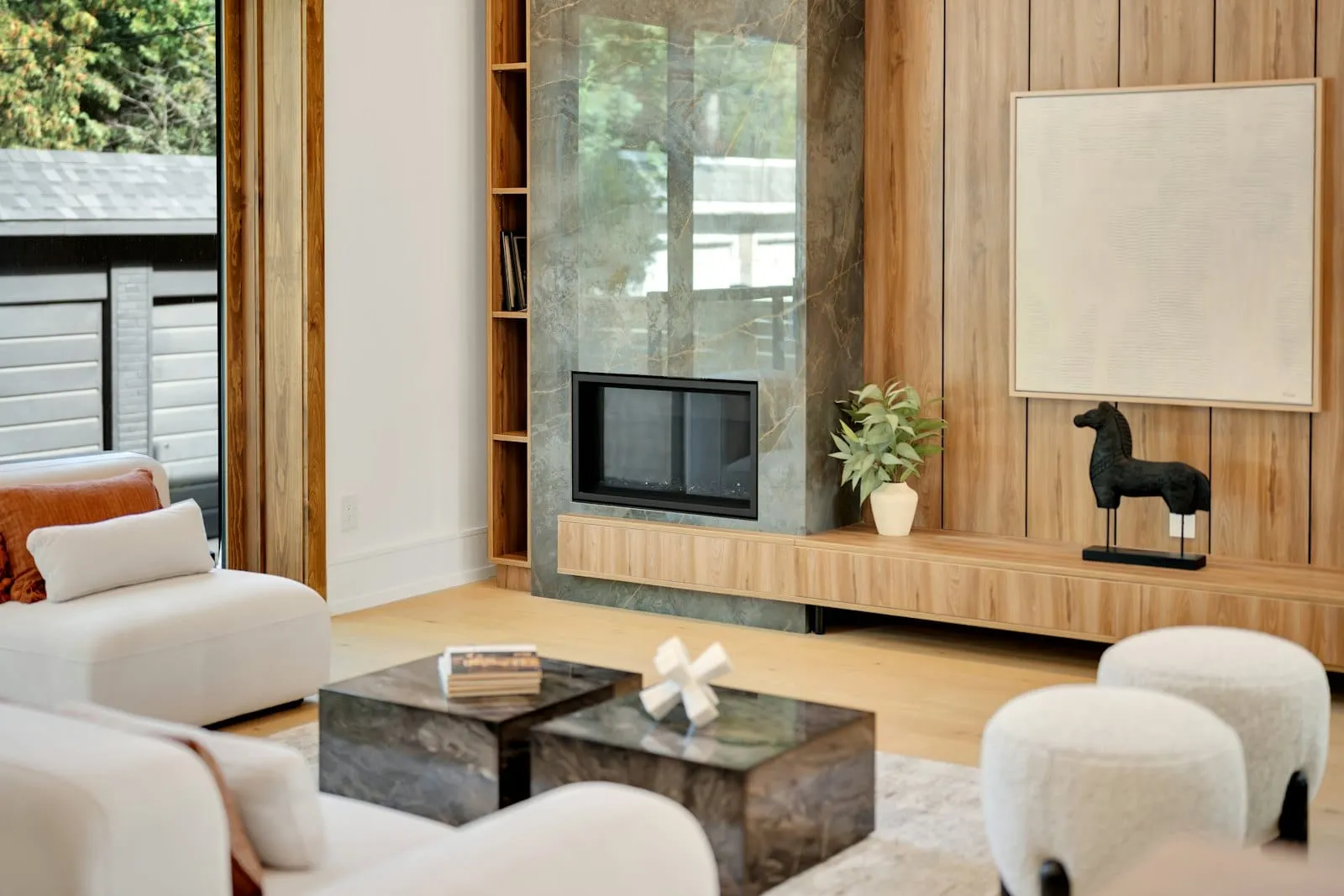
No single element has more influence on whether a guest clicks your listing than the cover photo. In search results, it’s larger than your title and immediately visible. A dark, cluttered, or low-resolution cover photo loses guests before they’ve read a word.
Your cover photo should:
| Principle | What it means in practice |
|---|---|
| Show the most impressive space | Usually the living area or a standout feature, not a bedroom |
| Be bright and well-lit | Natural light whenever possible; no dark shadows |
| Have clear, uncluttered surfaces | Staged for the photo, not “lived-in” |
| Be shot wide | Gives a sense of space; makes rooms feel larger |
| Represent the actual property accurately | Misleading covers hurt reviews and damage long-term ranking |
A strong cover photo increases click-through rate, which is a signal the algorithm uses. More clicks from search → more bookings → stronger review scores → higher placement → more clicks. The compounding effect starts with the photo.
Listing Completeness and the Amenity Checklist
Airbnb’s algorithm penalizes incomplete listings. More importantly, its filtering system means guests can search for specific amenities — and if your property has those amenities but you haven’t listed them, your property is invisible to that filtered search.
Go through every field in your listing editor:
- Description sections — space description, neighborhood, getting around, notes for guests
- Amenities — check every item your property actually has, including things you may consider obvious (washer/dryer, iron, smart TV, coffee maker)
- House rules — fill out all fields, even if the answer is “none”
- Check-in details — arrival instructions, parking, key or code access
Hosts who set up a listing quickly and never revisit it often have dozens of relevant amenities unchecked. A dedicated workspace, EV charging, a balcony or patio, blackout curtains, streaming services — these are all filterable. Missing any of them means missing the guests who searched for them.
This is related to the broader listing setup mistakes that hurt bookings — for more on what incomplete or poorly-structured listings cost you, see our post on common Airbnb listing mistakes to avoid.
Response Rate and Instant Book
Airbnb measures your response rate — the percentage of inquiries you reply to within 24 hours — and uses it as a ranking factor. Superhost status, which is displayed on your listing and affects your visibility in search, has explicit response rate requirements.
Beyond the algorithm, there’s a human reality: guests shopping for a property often send inquiries to multiple listings at once. A fast, helpful response often wins the booking before the slower-responding host has replied. Aim to respond to all inquiries within an hour during waking hours.
Instant Book removes the response lag entirely for bookings. When enabled, guests can book immediately without waiting for your approval. Airbnb favors Instant Book listings in search because they convert more reliably. You can set guest requirements — verified ID, positive review history, agreement to house rules — to maintain quality control while still gaining the ranking benefit.
Pricing Competitiveness
The algorithm takes into account how often your listing gets booked relative to how often it’s viewed. A listing that’s frequently viewed but rarely booked — because the price is out of range relative to comparable options — signals to the algorithm that it’s not satisfying demand and will be surfaced less often.
Pricing competitively doesn’t mean pricing cheaply. It means pricing accurately relative to your property’s position in the market. Dynamic pricing tools do this continuously — adjusting your rate based on local demand, competitor availability, events, and seasonality. The result is a listing that stays competitive without manual monitoring.
For context on how this affects full-year revenue, see our post on how dynamic pricing increases Airbnb revenue.
Reviews: The Compounding Ranking Factor
Review scores are one of the most direct inputs to Airbnb’s search ranking. Listings with consistently high ratings are placed higher; listings with review scores below a certain threshold can be suppressed or removed from search entirely.
Recent reviews carry more weight than older ones. A listing that’s actively receiving new, strong reviews signals to the algorithm that it’s currently performing well — not just that it performed well two years ago. This means the work of earning good reviews is never done; it’s an ongoing hosting practice, not a milestone to check off.
Tactics for improving review scores:
- Set accurate expectations — reviews are largely about whether reality matched the listing. Accurate photos and descriptions prevent disappointment.
- Respond to inquiries before guests ask — proactive communication in the days before arrival reduces friction and positions the stay positively before it starts.
- Handle issues immediately — guests who have a problem resolved quickly often review better than guests who had no problems at all.
- Follow up after checkout — leaving a review for your guest prompts them to review you. Mutual review requests increase review volume.
How Professional Management Affects Airbnb SEO
Every factor described above — response rate, listing completeness, review velocity, pricing accuracy — requires consistent, ongoing attention. That’s the core challenge for self-managing owners: the algorithm doesn’t reward one-time setup, it rewards sustained performance.
Full-service Airbnb management addresses this by building systems around each factor: automated pricing updates, fast inquiry response, professional photography and listing setup, proactive guest communication, and consistent cleaning standards that protect review scores. For properties in competitive markets, the compounding effect of sustained high performance in Airbnb’s algorithm is a meaningful revenue driver over time.
To see what a well-optimized, professionally managed listing in your Atlanta neighborhood could realistically earn, exploring the areas we serve and requesting a projection is the most grounded starting point.
Want to see what your listing could earn when it’s set up and managed to perform? Get a free rental projection from ATLStay — we model your specific property against real comparable listings and give you an honest range. Or call us at (770) 999-9740.
Written by the ATLStay team
We're a short-term rental management company based in Atlanta. Across our portfolio we manage 450+ homes, have earned 10,000+ five-star guest reviews, and bring 10+ years of hands-on Atlanta hosting experience to every guide we publish. More about ATLStay →
Questions about your specific property?
Talk to a real person on our Atlanta team — straight answers, no scripts.
Free projection · about a minute
What could your property earn?
Tell us about it and we'll build a free, comps-based projection — a real person, not an algorithm, back to you within one business day.
Free, no obligation. Prefer to talk? Call (770) 999-9740
Step 1 of 4 · Address
What’s the address of your property?
We’ll pull real, comparable Atlanta listings to build your projection.
Common Questions
Frequently Asked Questions
Does Airbnb have its own search algorithm separate from Google?
Yes. Airbnb's internal search algorithm — sometimes called Airbnb SEO — determines which listings appear at the top of results when a guest searches for dates and a location. It's entirely separate from Google search ranking. Factors include listing completeness, response rate, review scores, booking conversion rate, how often you update your calendar, pricing competitiveness, and Superhost status.
Do keywords in an Airbnb listing title actually matter?
They matter, but not in the same way keywords work in Google. Airbnb doesn't do deep keyword analysis of your title. What your title does is influence click-through rate — the fraction of guests who see your listing in results and click on it. A title that clearly communicates the property's strongest selling points (location, standout features, type) earns more clicks, which signals to Airbnb's algorithm that the listing is relevant and appealing.
How do reviews affect Airbnb search ranking?
Review scores are one of the most direct ranking factors in Airbnb's algorithm. Listings with consistently high ratings (4.8 and above) are favored in search placement. Review quantity also matters — a listing with many recent strong reviews signals to the algorithm that it's actively booked and consistently delivering good guest experiences. Newer reviews carry more weight than older ones.
Does Instant Book affect my Airbnb search ranking?
Yes. Airbnb's algorithm favors listings with Instant Book enabled because they convert browsers to bookers more efficiently — guests don't have to wait for a host to approve the request. If you're comfortable setting guest requirements (verified ID, positive reviews, etc.) as filters, Instant Book can meaningfully improve your listing's visibility without requiring you to accept every request unconditionally.
How often should I update my Airbnb listing?
Calendar activity signals to Airbnb that your listing is actively managed. Update your calendar, pricing, or listing details regularly — even small changes show the algorithm that the listing isn't dormant. Some hosts update pricing manually on a weekly basis specifically for this reason, though automated dynamic pricing tools accomplish the same signal continuously.
What's the fastest way to improve my Airbnb listing's search visibility?
Start with completeness: fill out every available field, list every amenity, add a thorough description. Enable Instant Book if feasible. Make sure your photos are high quality and your cover image is strong. Respond quickly to all inquiries. Then focus on collecting strong early reviews through attentive hosting. These fundamentals compound — there's no shortcut that replaces them.
Looking for more owner guides?
← Back to all resourcesRelated guides
Keep reading
Choosing the Right Airbnb Cancellation Policy
Flexible, Moderate, or Strict — your Airbnb cancellation policy shapes both booking conversion and income protection. Here's how to choose the right one for your listing.
Read the guide → Marketing & ListingsHow to Become (and Stay) an Airbnb Superhost
Airbnb Superhost status lifts your search ranking and conversion rate — but the criteria are demanding. Here's what it takes and how professional management sustains it.
Read the guide → Marketing & ListingsShould You Turn On Airbnb Instant Book?
Instant Book boosts your Airbnb ranking and fills your calendar faster — but the tradeoffs are real. Here's when to enable it and how to protect yourself.
Read the guide →See what your home could earn
Get a free, no-obligation rental projection from people who actually manage homes in your neighborhood.
Free · comps-based · delivered within one business day.